How a disillusioned former CryptoPunk owner is trying to change the NFT copyright game

Quick Take
- Punk 4156 had dreams of commercializing his CryptoPunk. Then copyright restrictions got in the way.
- NounsDAO, the project that Punk 4156 started instead, is aimed at freeing NFT owners from the restrictive copyright rules imposed by the creators of CryptoPunks.
We'd love your feedback.
Punk 4156 didn’t want to sell his precious — and rare — CryptoPunk for over $10 million, but he felt he had no choice.
CryptoPunks, a collection of 10,000 algorithmically generated pixelated heads, first dropped in 2017, was the original profile picture non-fungible token (NFT) collection. Punk 4156, like many fellow Punk owners, chose to use his NFT as a sort of digital identity.
His pseudonym (which he kept after he sold the token) comes from his old Punk: CryptoPunk #4156, one of 24 Ape Punks known for its blue bandana. It’s the 46th rarest NFT of the collection.
In the beginning, Punk 4156 had what he thought was a straightforward plan for his NFT, beyond using it as his digital identity: to turn it into a business.
“I decided it would be fun to build a personal brand around the Punk and to give it a presence in the world,” Punk 4156 (who wished to remain pseudonymous to maintain his privacy) recently told The Block. “So I set up Punk 4156 on Twitter and then started tweeting and operating as Punk 4156 for just about a year.”
Then, two years after the CryptoPunks launched, Punk 4156 — and anyone else who wanted to make money off of their punk — got some bad news: the copyright license that Larva Labs, the creators of CryptoPunks, had adopted, stipulated that Punk owners were not allowed to make more than $100,000 from their NFT.
Punk 4156 realized his commercial dreams for the Punk wouldn’t materialize under such a strict legal stance on the part of Larva Labs.
“I decided to move on from the Punk because of the uncertainty at the time around copyright and permission to operate with the Punk as a brand,” he said. “Ultimately, it just didn't make sense to build a brand around something where somebody else had a stronger claim to the brand than I did.”
He sold his bandana-wearing ape in December of 2021, for 2,500 ETH ($10.26 million at the time). But by then he had replaced his CryptoPunk dream with a new one: NounsDAO, an NFT project whose pixelated figures are free from the restrictive intellectual property rules imposed by previous projects.
CryptoPunks and copyright
The bad news came in May 2019, via a Discord post from a Larva Labs representative named pents90. “Hi everybody, just to clear up any license confusion, we are going to adopt the standard NFT License,” pents90 wrote.
The so-called standard NFT license was designed to protect the intellectual property behind Dapper Labs’ 2017 NFT project CryptoKitties. The license allows both personal and non-commercial use of digital assets that only the holders own — meaning you can’t monetize someone else’s NFT. It also forbids the NFT owner from earning more than $100,000 in revenue from the digital asset.
“We aren’t lawyers, so we aren’t really up for debating the fine points,” pents90 continued, before assuring Punk owners that Larva Labs still wanted “to allow pretty much any derivative work for personal use, and to allow most derivative works for small-scale commercial use.”
More to the point, though: “We don’t want to allow derivative works that attempt to hijack or modify the project in some way.”
The team wanted to make sure that, for example, CryptoPunks and Autoglyphs, another of the firm’s collections, “aren’t co-opted by a big company that undermines the original intent,” wrote pents90.
The standard NFT license stipulates that those who earn, or think they have the potential to earn, more than $100,000 in revenue from an NFT under this contract must contact the NFT’s creator and negotiate a special commercial license use for the token, which could include royalties paid to the original creator.
Dapper Labs explains its own rationale for using the license on its website: “Dapper Labs, Inc. created the art of your NFT, and it’s likely a big part of their brand. Commercializing your art is exciting, but at the end of the day, businesses also need to have the right to make the big decisions about how the art gets used in a commercial setting.”
Larva Labs' adoption of this stance caught Punk 4156 and other owners off guard because they say the firm didn’t initially give clear guidelines about what users could and could not do with their NFTs — hence the need for Larva Labs to clarify the “confusion” in Discord two years later.
The Block reached out to Larva Labs for comment via Twitter but did not receive a response before publication. The Block also emailed a media contact for Yuga Labs, which purchased the intellectual property for CryptoPunks from Larva Labs in March, and asked for clarification regarding both the project’s original 2017 copyright license and Yuga Labs’s current copyright guidelines over CryptoPunks. Yuga Labs also did not respond before publication.
NounsDAO to the rescue
With NounsDAO, which launched in August of 2021, Punk 4156 is determined to remove the barriers to creativity and commercialization associated with previous NFT collections.
NounsDAO is set up to mint one new collectible image, or “noun,” every day, forever. According to Punk 4156, this is supposed to prevent a scenario in which the earliest adopters are in a better position to profit compared with the rest of the community of owners.
All the proceeds from the daily auctions go directly into the NounsDAO treasury — which holds over $70 million worth of ETH as of publication — to be used to further grow the DAO. Noun owners vote on how to allocate treasury funds.
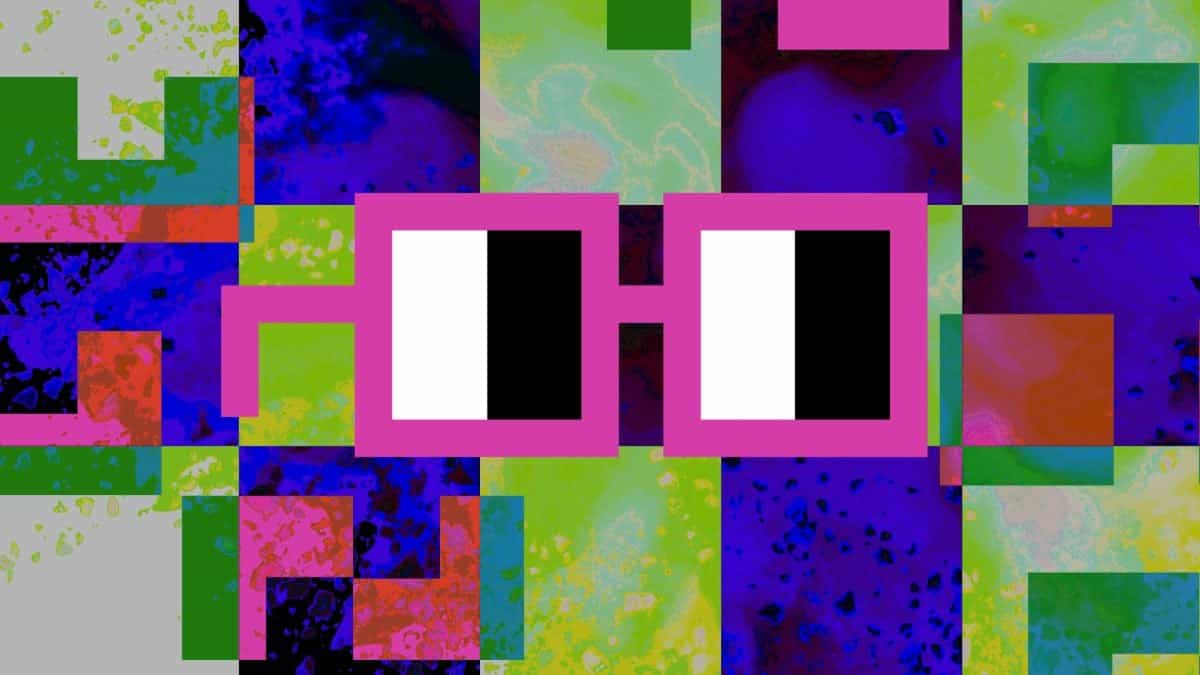
Every noun is a colorful pixelated being wearing eyeglasses.
-
- Noun 276.
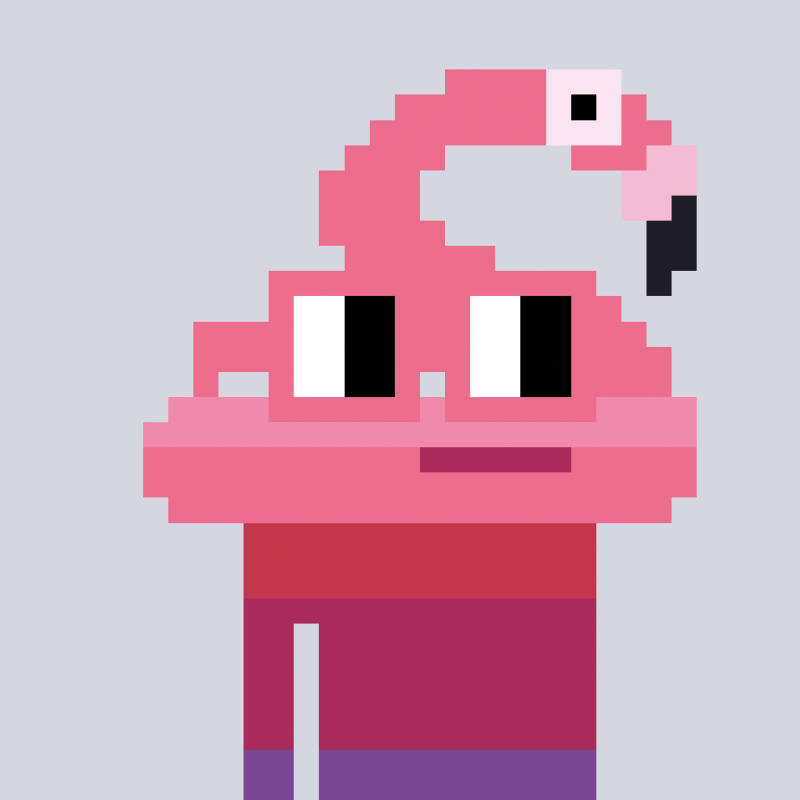
-
- Noun 259.
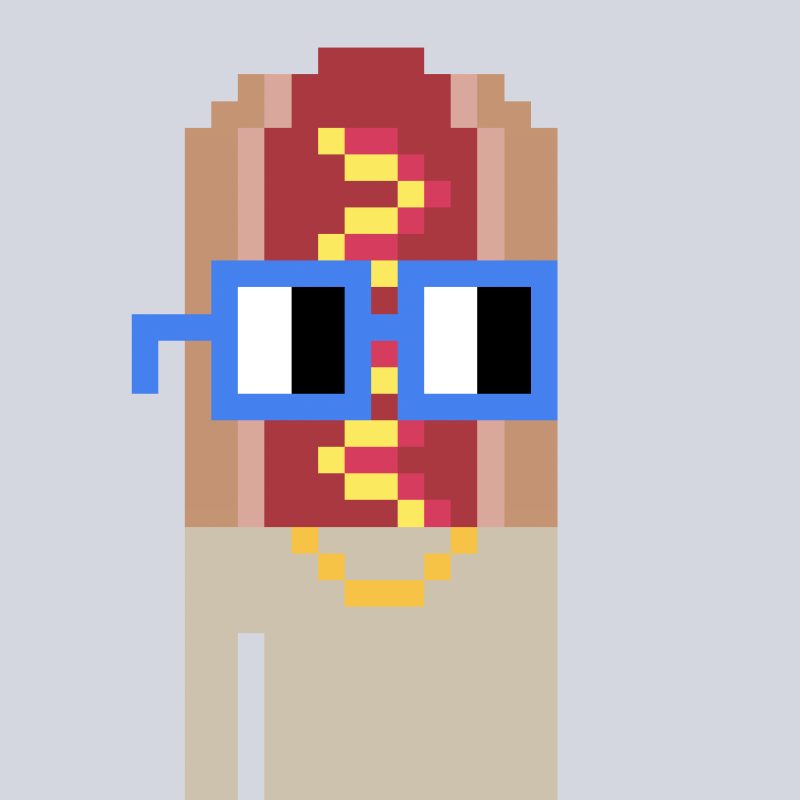
-
- Noun 267.
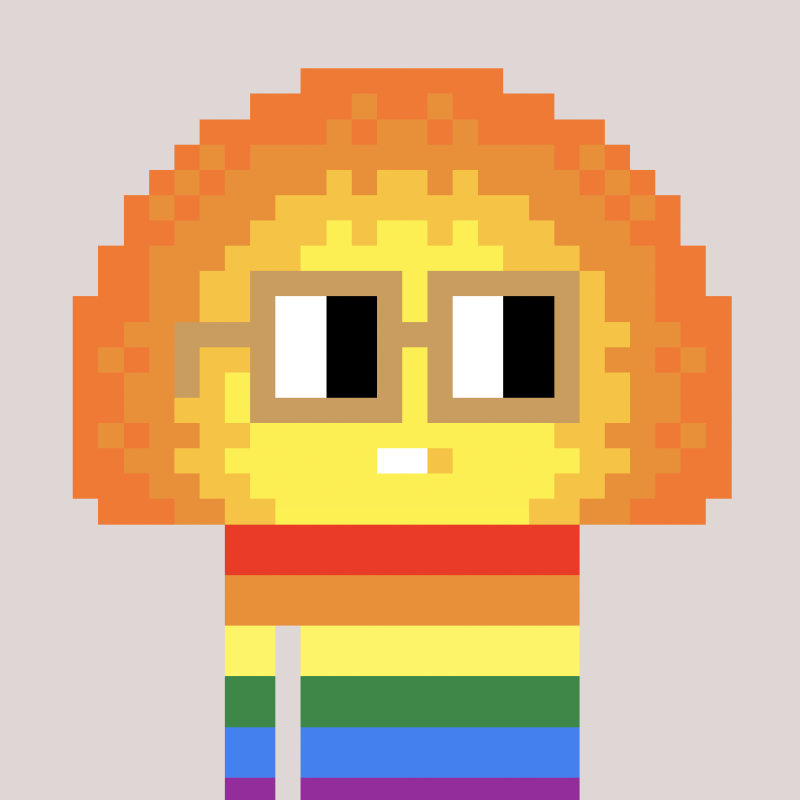
The artwork associated with NounsDAO NFTs is all in the public domain. The project uses a specific kind of Creative Commons License called CC0. This classification means that a creator waives their rights related to their work and places it in the public domain for others to build upon or reuse, according to Creative Commons.
Anyone can freely alter or commercialize the art behind a Nouns NFT, and they don't need prior consent from NounsDAO to do so. Yuga Labs, creators of the popular Bored Apes NFT collection, recently took advantage of this when it featured a shark Noun in a video marketing a project called “Otherside.”
That kind of publicity is one of the biggest benefits of CC0, according to ToadyHawk.eth, one of the NounsDAO Nouncil founding members, a council of leaders representing the holders of projects related to Nouns, and creator of a Nouns-inspired derivative project called NounPunks, which mixes Nouns-style pixelated eyeglasses with avatars inspired by CryptoPunks.
“Yes, anybody can use your assets — and that could be a double-edged sword,” said ToadyHawk.eth. “But when they do, that's free exposure.”
NounsDAO has also inspired the kind of derivatives that Larva Labs tried to discourage. Besides NounPunks, for example, there is also Noundles, a collection of 7,500 NFTs depicting non-pixelated Noun figures, and Noun GAN, 64 animated NFTs of watercolor Nouns.
There’s even one called NounPhunks, which is a derivative of NounPunks and is inspired by a CryptoPunks derivative called CryptoPhunks — which Larva Labs claims is a violation of its copyright.
“I think it's a good example because, technically, if someone wants to buy a NounPhunk, they can do so for a fraction of the price now of a NounPunk,” said ToadyHawk.eth. “So it shows provenance does matter when people are looking at purchasing an NFT or joining an NFT community.”
“I think what NounsDAO has pioneered is the idea that if you have something that resonates with people that's amenable, and you give it away for free, then, because you're on the blockchain, it can never be argued that you weren’t the original,” he added.
Punk 4156 thinks derivatives that refer to the original piece make that piece more valuable, not less, similar to how academic citations elevate the value of the original source. “NFTs as digital originals benefit from as much replication and referencing as possible,” he said.
© 2026 The Block. All Rights Reserved. This article is provided for informational purposes only. It is not offered or intended to be used as legal, tax, investment, financial, or other advice.