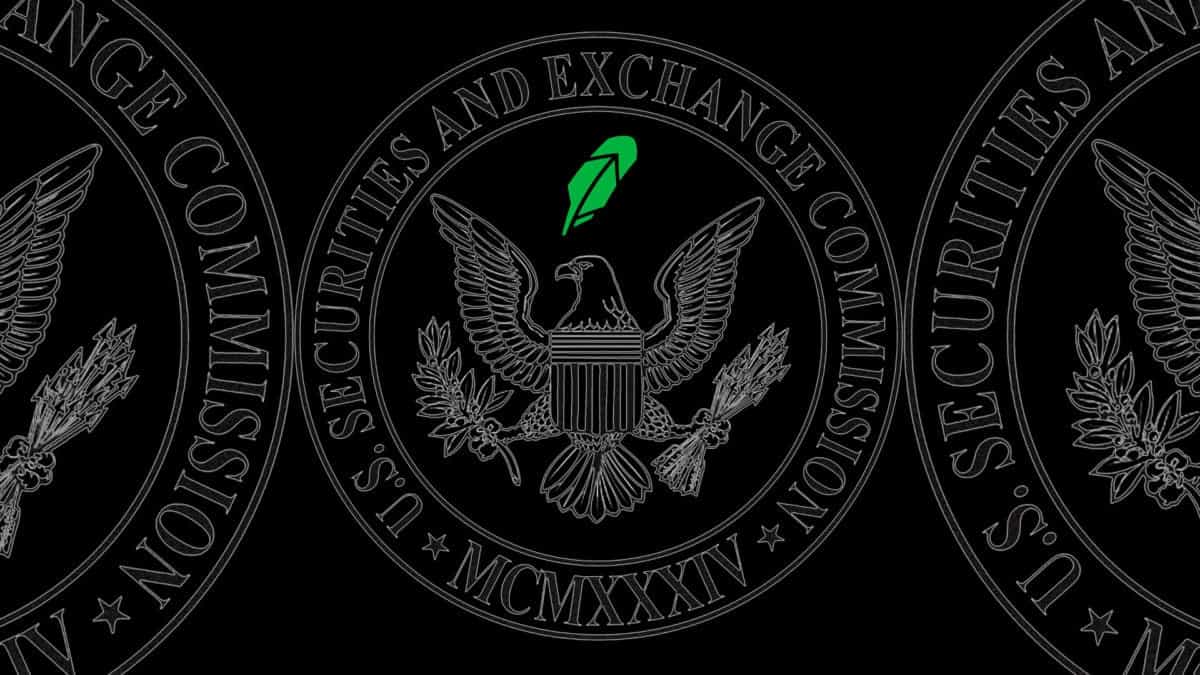
Robinhood's new top lawyer, a former SEC commissioner, could help the firm shed its scrappy roots

Quick Take
- Recently appointed as CLO of Robinhood, former SEC commissioner Dan Gallagher could help shake off the broker’s scrappy roots
- The former SEC commissioner navigated a media firestorm as the chief legal officer of EpiPen maker Mylan
- Gallagher could also have a lasting impact on the broker industry
We'd love your feedback.
"It is not an easy job."
Dave Weisberger, chief executive of CoinRoutes, is talking about the chief legal position at Robinhood, the popular broker and app-maker with a Millennial focus. It's the way several sources familiar with Robinhood's business described the top legal job.
The company has experienced breakneck growth over the last two years. But it has also had its fair share of regulatory and legal hiccups stemming from platform outages, best-execution practices, and new product launches.
Last week, Robinhood raised an eye-popping $280 million Series F round. With less fanfare, Robinhood announced that its chief legal officer Anne Hoge – who joined the company in November 2019 – is set to leave at the end of the month. Hoge came from the technology world, previously holding top legal positions at NetApp and Yahoo.
The person stepping into the role – Dan Gallagher – brings experience from market structure world, suggesting that the firm might be shaking off its scrappy, move-fast-and-break-things mentality, according to industry experts.
Gallagher previously sat on Robinhood's board, having joined in November 2019. A former commissioner for the Securities and Exchange Commission, Gallagher is "very knowledgeable on the rules and the enforcement vectors taken by regulators, and will likely make some changes," Weisberger said.
On top of that, Gallagher is known as a keen political operator with close ties to Republicans in Congress as well as the leadership within the SEC.
Gallagher's story
Sworn in as a commissioner in 2011, Gallagher focused on capital markets and small business formation, according to his profile on the SEC's website.
Before joining the SEC, Gallagher was at the front lines of the financial crisis as a deputy director and co-acting director in the agency's Division of Trading Markets from 2008 to 2011. During that time, he represented the SEC in the liquidation of Lehman Brothers.
Later, as a commissioner, Gallagher contributed to the development of the JOBS Act, legislation meant to ease regulations around certain private sales.
He left the SEC in 2015 to enter the private sector and start his own consulting firm. Gallagher later drew on his public-sector experience to help pharmaceutical firm Mylan navigate its own regulatory issues. Mylan hired Gallagher in March 2017.
In 2019, the firm – under Gallagher's legal guidance – reached a $30 million settlement with the SEC, which had been investigating its accounting procedures around EpiPen, the emergency allergy shot.
The 3-year-long probe followed an earlier $465 settlement between the company and the Department of Justice and several other government agencies tied to alleged price-gouging of its EpiPen from $100 to more than $600, as reported by The New York Times.
Mylan did not admit wrongdoing, but the federal government claimed the company erroneously misclassified EpiPen as a generic drug, which allowed it to avoid paying certain rebates to the government.
At the time, market observers interpreted Mylan's hiring of Gallagher as a way to fix its image in Washington, as Ronny Gal, an analyst at Alliance Bernstein, noted.
"I think Mylan was expecting multiple challenges on the D.C. front, so a D.C. guy makes sense," he said.
On to Robinhood
Gallagher joins Robinhood in the midst of its own difficult period. Over the course of the last two years, the firm has drawn the ire of financial media over its business practices and several platform outages. In March, Robinhood experienced a two-day outage at the beginning of the month, which the company said was tied to "stress" on the platform from whipsawing markets.
A user in Sarasota, Florida soon filed a class-action lawsuit. The plaintiff's father – who is also acting as his attorney – described the outage as a "massive failure of their system." The lawsuit seeks more than $5 million in damages.
It is not clear if Robinhood is on the hook from a legal or regulatory perspective. As noted by CNBC, its 44-page user agreement claims that the company isn't responsible for platform failures that are "beyond" its control. Weisberger, for his part, doubts that the outages will lead to any sort of enforcement action since they didn't have a broader impact beyond Robinhood's own user-base.
In any case, the outages were definitely not good from a public relations perspective. And they follow the firm's botched roll-out of a cash management feature in December 2018, the pulling of its bank charter in November 2019, and a $1.25 million fine from FINRA in December 2019.
"The hire of Gallagher shows they are working with the regulators," David Silver, a well-known attorney in the crypto world, said in a phone interview. He added that Robinhood has probably been communicating with regulators about the outages. "He gives credibility to them."
Still, others questioned whether the hire of Gallagher is just another example of the revolving door between financial regulatory agencies and the companies they're tasked with regulating.
It's not clear if Robinhood will have to face the commission on any of the issues it has encountered. But the hiring of Gallagher, one industry source says, makes it clear that Robinhood doesn't want to get caught wrong-footed.
"If you were in trouble with the SEC and you had to settle an action the number one person you would call would be Dan Gallagher," another industry source said.
Robert Hockett, a law professor at Cornell, said the hire of Gallagher reminded him of developments in the software and internet space during the late '90s.
"When the Microsoft antitrust litigation got rolling in the late 90s, commentators remarked on how all the Silicon Valley whippersnappers had had all the arrogance of youth and success, ignoring 'realities' - i.e., lawmakers and power-brokers in D.C., not to mention the law itself," he said in an email. "Not long after that, Microsoft began lawyering up with lots of insider lawyers like David Bois."
Still, some say the hire is not in the public's interest.
"What Gallagher understands more than anyone else is what the SEC takes seriously, how a violation is found, how they will negotiate, he knows all the weaknesses, which are plentiful. That gives Robinhood a deep understanding of its adversary," Jeff Hauser, executive director of the Center for Economic Policy and Research's Revolving Door Project, told The Block.
"Gallagher had input and influence in the SEC...this is a man who knows the SEC inside and outside," he added.
What comes next
To be sure, it's not unusual for a company with deep pockets to bring on someone with a background like Gallagher's.
Regardless of where folks stand on the ethics of former regulators working for companies they would have regulated, there's no doubt that Gallagher will have an impact on policy that affects both Robinhood and the broader brokerage world.
Gallagher might be able to pre-empt any attempts by lawmakers, a new White House administration, or new Democratic leadership in the SEC to examine the practice of payment-for-order flow more closely. The practice is how brokers like Robinhood make the bulk of their revenues. Large trading operations like Citadel Securities and Virtu Financial pay brokers for retail flow, which they then internally match. Robinhood brought in more than 40% of its revenue in early 2018 from selling customer orders to large traders, as reported by Bloomberg. Some market participants have questioned whether such companies have acted in the best interest of clients.
For instance, Citadel Securities in 2017 paid a $22.6 million fine for not executing customer orders at the best price, as reported by The Wall Street Journal.
"If the SEC moves forward with a Transaction Fee Pilot that curbs the use of rebates paid by exchanges then that might then propel them toward banning any payment to a broker, including PFOF," one source said, referring to a pilot that would examine the use of rebates in markets. The pilot was put on hold last year following court challenges by the New York Stock Exchange and Nasdaq.
Whatever Gallagher's ultimate impact is, it's a sure sign that Robinhood is looking for acceptance inside the Beltway. It's also fair to say that Robinhood likely hopes that this choice will signal a desire to play nicely with regulators and be seen as a rule-abider, not a rule-breaker.
© 2026 The Block. All Rights Reserved. This article is provided for informational purposes only. It is not offered or intended to be used as legal, tax, investment, financial, or other advice.