What a Yellen-led Treasury Department might mean for central bank digital currencies

Quick Take
- Joe Biden is expected to nominate Janet Yellen as the next Secretary of the U.S. Treasury Department.
- It’s possible a U.S.-centric CBDC will move forward or launch during her tenure.
We'd love your feedback.
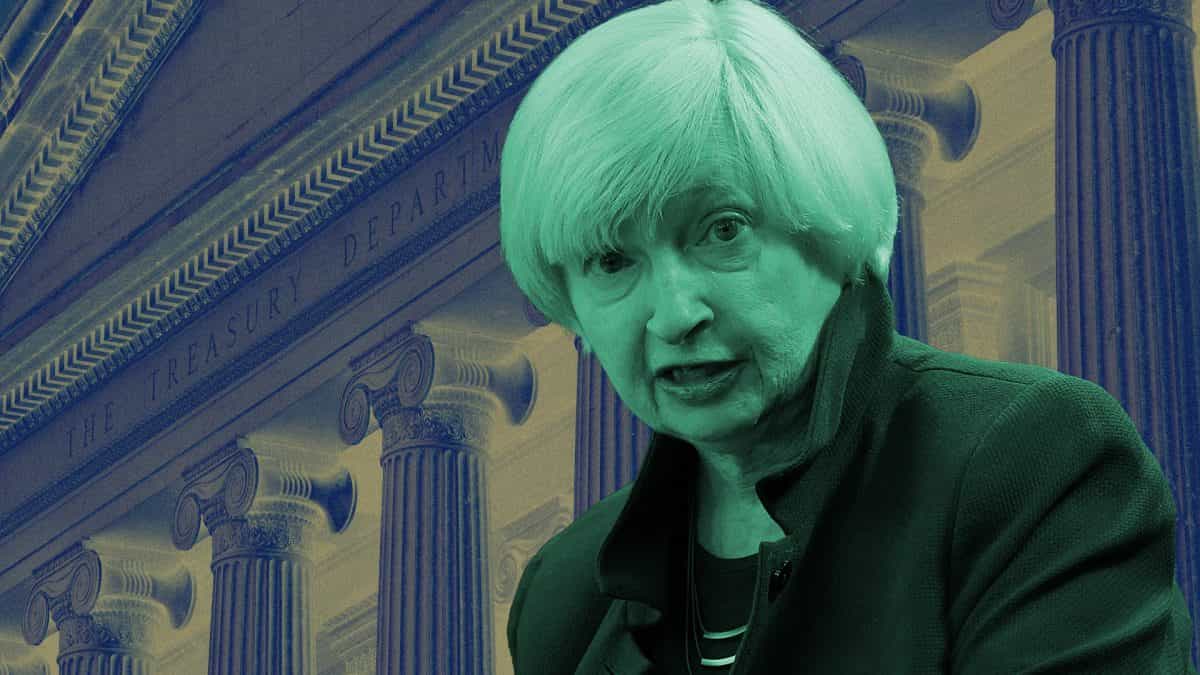
If the reports are true, president-elect Joe Biden is set to nominate Janet Yellen, the former chairwoman of the U.S. Federal Reserve, as the next Secretary of the Treasury Department.
Much ink has been spilled in the crypto-press about the possible implications of Yellen’s selection. She’s an avowed skeptic who declared “I am not a fan” during an October 2018 appearance at a fintech conference. At the time, she declared “very few transactions are actually handled by bitcoin, and many of those do take place on bitcoin are illegal, illicit transactions.”
On the question of blockchain technology more broadly, Yellen struck a somewhat more positive note, contending in January 2017 that it’s “an important technology.”
But there’s one area that, thus far, received less attention, though global developments indicate might become especially pertinent during the duration of Biden’s first term: whether the U.S., via the Federal Reserve, will see the launch of a digital dollar.
What role the Treasury Department might play in a future digital dollar launch isn’t clear. A short-lived proposal to issue a kind of digital dollar as a form of pandemic stimulus envisioned the Treasury making monthly disbursements via Fed-housed digital wallets. Steve Mnuchin, the Trump administration’s Treasury Secretary, previously said he saw no immediate need for a digital dollar.
Current Fed chair Jerome Powell has stressed in past comments that the Fed is nowhere close to approving such a launch. But he’s struck positive notes about central bank digital currencies in broad terms, noting in September that “there are a number of ways a CBDC might improve the payment system, and it is this area that motivates our interest." Earlier this month, Fed vice chairman Randal Quarles said that “[t]his is still in the early stages. I wouldn't say we've changed our stance and believe that this is something the U.S. needs.”
But what about Yellen? Yellen led the Federal Reserve between 2013 and 2018 — an auspicious period, perhaps, from the vantage point of cryptocurrency’s ascendency and development.
To date, Yellen’s public comments on central bank digital currencies have been limited.
During a late 2017 press conference, Yellen highlighted the Fed’s work on a digital currency, stressing that “this is not something the Federal Reserve is seriously considering at this stage.”
“While we're looking at research on this topic, there are, I think to my mind, limited benefits from introducing it, a limited need for it and some substantial concerns,” she continued.
In the October 2018 fintech event appearance, which was recorded,, Yellen expressed skepticism, though she raised concerns — potential risks to cybersecurity and financial stability and the impact on commercial banks — that had been voiced by others in the central banking world.
She noted that research on CBDCs was taking place within the Fed during her tenure. But the bulk of her remarks focused on the potential negative implications, suggesting that a digital dollar from the Fed might “undermine” the important role that commercial banks play in the financial system.
It’s possible that Yellen’s thinking on this matter has evolved. Since she was Fed chair, the conversation about CBDCs has grown significantly more tangible. The People’s Bank of China has moved closer to launching its digital currency system, dubbed DC/EP, and the Facebook-led Libra stablecoin project has turned the heads of regulators around the world. As Powell put it himself earlier this year, Libra “really lit a fire” under the Fed’s internal efforts.
Should Yellen’s nomination be approved in the U.S. Senate, another dynamic would come into play: the fact that Yellen would work closely with Powell. This would mean that the two people responsible for carrying out fiscal and monetary policy initiatives have or will have, at one point or another, run the U.S. central bank.
What this means in terms of near-term testing of a digital dollar remains to be seen.
Advocates have pushed for digital dollar initiatives and it’s possible that Congress could pressure a Yellen-led Treasury to more robustly support such a move. Also, the prioritization of FedNow — a push to move U.S.-based payments to the real-time arena — may also dampen any near-term efforts to move a digital dollar to fruition.
© 2026 The Block. All Rights Reserved. This article is provided for informational purposes only. It is not offered or intended to be used as legal, tax, investment, financial, or other advice.