What New York City’s new mayor can — and can’t — do for the crypto industry

Quick Take
- Eric Adams has gone out of his way to broadcast his enthusiasm for cryptocurrency.
- Here are the things he can actually change now that he’s mayor of New York City.
We'd love your feedback.
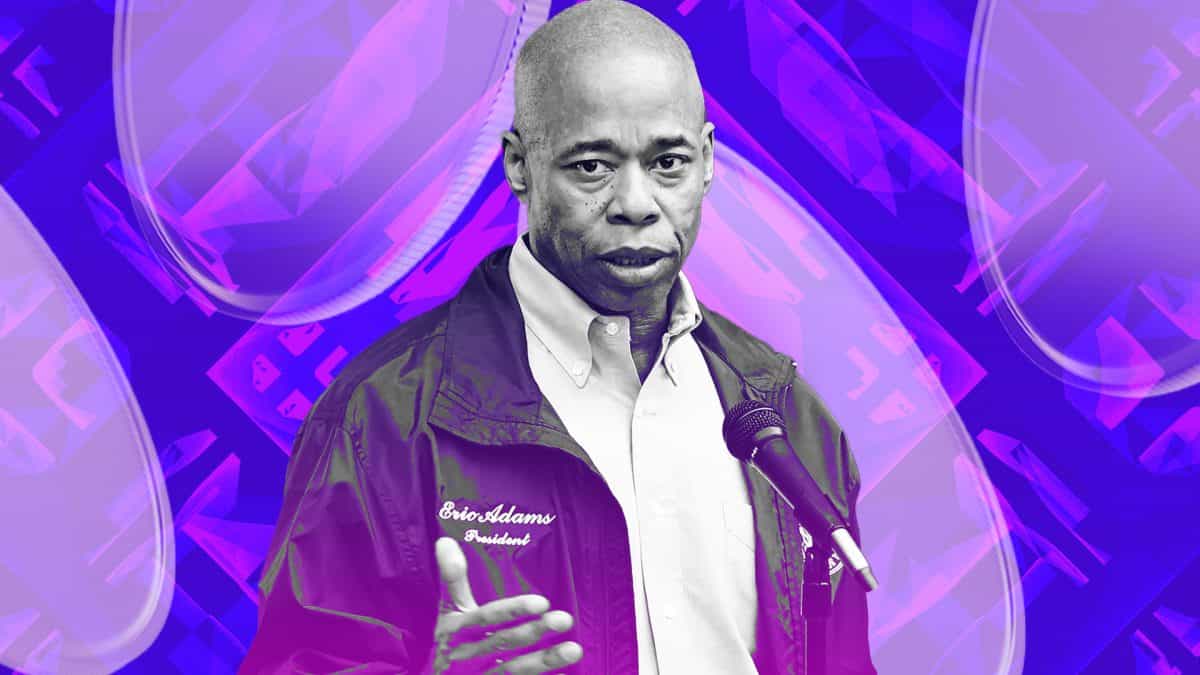
New York City now has a crypto-friendly mayor. But how much of a difference will that make for crypto?
Eric Adams was sworn in during a Times Square ceremony in the first moments of the New Year. In the lead-up to his inauguration, the mayor-elect left no doubt about his pro-crypto stance. Now that the new year and new term have begun, though, the pressure is on to make real change.
Thus far, Adams has made broad but vague commitments to the crypto community.
For instance, during a post-election interview with Bloomberg, he said he’s committed to looking into “what’s preventing the growth of Bitcoin and cryptocurrency in New York” as part of a larger push to make the city more business-friendly.
"We're too bureaucratic, too expensive and too difficult to do business," he said at the time. "Our agencies, they go into businesses looking for ways to penalize or fine them. We're changing that atmosphere altogether, we're going to become a business-friendly city."
But how much can Adams really do for crypto? He can’t fix what many in the industry see as New York’s biggest barriers, as they are state-level policies. But there are still levers of policy he can use to include crypto in his plans to optimize the city, as well as influence the conversation on the state level.
And even if Adams’s power to make New York more crypto-friendly is constrained, industry players say a vocally pro-crypto NYC mayor will be enough to make a substantial difference.
Opportunities for change
Though much of his crypto advocacy has been vague, Adams has made some tangible commitments.
He has said he will take his first three paychecks in bitcoin, following the lead of crypto-friendly Miami Mayor Francis Suarez. The two exchanged Twitter messages about their commitments, and Adams later told Bloomberg he intended to foster friendly competition between New York and Miami when it came to the adoption of digital assets.
Adams also followed Miami’s lead by signaling approval (on Twitter) for the CityCoins protocol to launch NYCCoin — a programmable token that is meant to create an additional revenue stream for local governments through residents’ minting of the tokens. The city of Miami claimed in November that it had generated more than $21 million through residents’ use of MiamiCoin.
Both of these actions seem to be within his authority, according to legal experts, though the fine points of how the millions in CityCoin funds can be used are less clear.
Adams could also implement blockchain processes in his own office and the offices that fall under his purview. This might include enabling crypto as a payment option for city employees (which he has expressed interest in doing), outfitting city residents with digital wallets, or using the blockchain to automate city processes.
However, multiple legal experts told The Block that since crypto is such a new and emerging technology, it isn't clear what is and isn’t covered in the city’s mandate. At any rate, Adams most likely cannot implement any crypto changes unilaterally. Most actions would need approval from the City Council, New York City’s legislative body.
Adams does have some authority to start the process of making the city generally more “business-friendly” by making it easier to find and obtain licenses for physical space and comply with the city’s business standards. He’d still have to work with the City Council to bring those changes to fruition, though.
State-level roadblocks
While Adams can implement blockchain-based processes with the approval of the City Council, he can’t do much to affect the controversial issues that reside on the state level. That includes much of what many see as a regulatory environment that stifles the crypto industry.
Mayoral powers cannot, for instance, affect the financial regulatory institutions that often hold up crypto’s development in the city. Adams has no authority over the New York Department of Financial Services, the issuer of the controversial BitLicense, which many in the industry see as unnecessarily burdensome and difficult to obtain. The NYDFS also issues state bank charters, which are sought after by crypto companies that engage in bank-like services and are also notoriously difficult to obtain.
Adams also cannot affect any New York Attorney General probes or create any sort of safe harbor for businesses.
What he can do, however, is make friends in Albany.
New York has seen a hostile relationship between its city and state levels in recent years. Former Mayor Bill De Blasio and former Governor Andrew Cuomo rarely came to an agreement, and their ire for each other was long-standing and far-reaching. The two fought over issues from pre-K funding to how to deal with a single rogue deer.
But those days are over, according to Adams, who seems intent on having allies in all places. Governor Kathy Hochul, who took over in the wake of the Cuomo scandal, has a good working relationship with Adams.
Having the ear of the governor will not lead directly to an overhaul of the BitLicense, but soft power can go a long way in putting crypto issues higher on the docket and swaying opinion.
Perhaps the most important piece of the puzzle is the state legislature. New York’s Senate has taken some harsh positions toward crypto already, like its moratorium on bitcoin mining. But it’s still early in the conversation, so Adams’s pro-crypto message has a chance to make a difference in the halls of the state Senate.
The bully pulpit
Some industry advocates say that even if Adams can’t change the regulatory environment himself, an outwardly pro-crypto mayor could prove a significant step forward.
Friendly mayors seem to impact the posture of all regulators, says Diogo Mónica, president and co-founder of crypto bank Anchorage, which has a pending BitLicense application before the NYDFS and a federal bank charter and has considerable experience navigating the regulatory waters in New York.
Somebody needs to go first, says Mónica, and when that person is a mayor of a major city, that understanding spreads to other areas of regulation and legislation. Further, he says, a pro-crypto mayor, especially one directly interfacing with businesses and intent on bringing crypto business to the city, can make the right introductions and help those businesses navigate regulatory complexity.
“It’s a step function difference in terms of you feeling like you know what you need to do and what the path is versus not even having the clarity on what the path is and who the players are,” Mónica says. “So absolutely, that is a dramatic difference to have a touchpoint that is an entry point into government that has all these connections, all of these networks.”
Mónica says the industry is already seeing this play out in Miami, where Mayor Francis Suarez has positioned his city as a beacon for crypto businesses. "There was a signaling that ‘we are open for business and we're here and we're friendly and we can help you navigate complexity even if you can't change the rules,’” he says.
Correction: a previous version of this article incorrectly stated Anchorage had received a BitLicense. Its application is still pending. We apologize for the error.
© 2026 The Block. All Rights Reserved. This article is provided for informational purposes only. It is not offered or intended to be used as legal, tax, investment, financial, or other advice.